
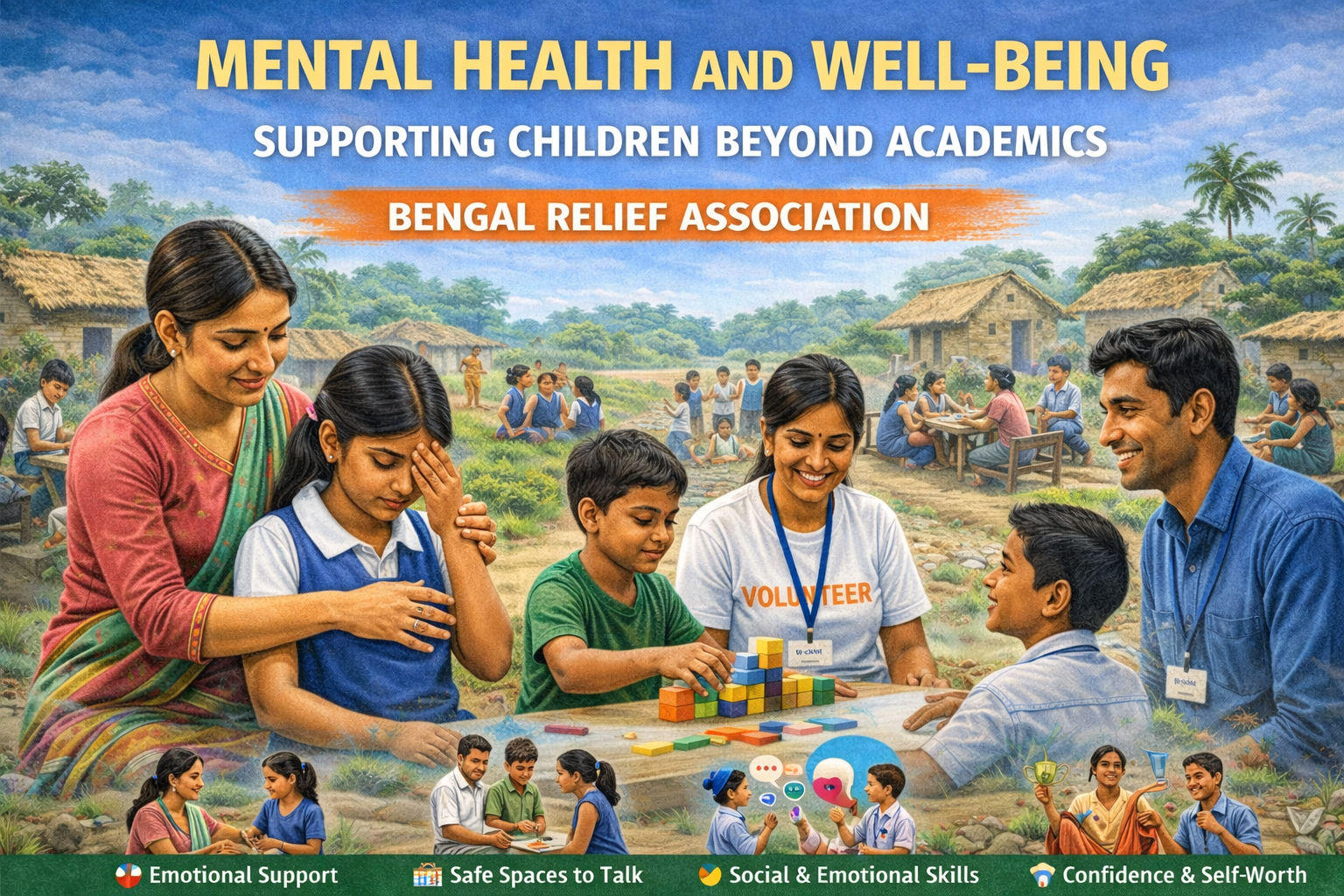
Mental Health and Well-Being: Supporting Children Beyond Academics
Education is often measured through grades, examinations, and academic achievements. While these are important indicators of learning, they represent only one part of a child’s development. True growth includes emotional stability, psychological resilience, confidence, and a sense of belonging. For children from economically and socially vulnerable backgrounds, mental health and well-being are just as critical as access to education.
At Bengal Relief Association, we believe that supporting children beyond academics is essential for building healthy, confident, and capable individuals. Mental health care, emotional support, and a nurturing environment play a vital role in ensuring that children can learn, grow, and thrive despite life’s challenges.
Understanding Mental Health in Children
Mental health refers to a child’s emotional, psychological, and social well-being. It affects how children think, feel, act, cope with stress, relate to others, and make decisions. Good mental health enables children to:
- Feel safe and valued
- Express emotions in healthy ways
- Build positive relationships
- Handle challenges and setbacks
- Develop self-esteem and confidence
For many children in West Bengal, especially those from underprivileged communities, mental health challenges are often overlooked or misunderstood.
The Hidden Burden Faced by Vulnerable Children
Children growing up in poverty, unstable environments, or crisis situations face stressors that can deeply affect their mental well-being. These may include:
- Financial insecurity at home
- Food shortages and poor nutrition
- Exposure to illness or disability
- Domestic conflict or neglect
- Loss of family members
- Natural disasters and displacement
- Pressure to work at a young age
Such experiences can lead to anxiety, fear, low self-worth, depression, or behavioral issues if not addressed early.
Why Mental Health Matters Alongside Education
A child who is emotionally distressed cannot fully benefit from education. Mental well-being is the foundation that supports learning and development.
Children with positive mental health are more likely to:
- Attend school regularly
- Concentrate and retain information
- Participate confidently in class
- Build friendships and social skills
- Cope with academic pressure
Ignoring mental health can result in poor academic outcomes, school dropouts, and long-term emotional difficulties.
Breaking the Stigma Around Mental Health
One of the biggest barriers to addressing mental health in children is stigma. In many communities, emotional struggles are misunderstood or dismissed as weakness or bad behavior.
Bengal Relief Association works to:
- Raise awareness about child mental health
- Encourage open conversations
- Normalize emotional expression
- Educate parents and caregivers
By breaking stigma, we create space for understanding, empathy, and support.
Creating Safe and Supportive Environments
Children need safe spaces where they feel heard, respected, and protected. A nurturing environment allows children to express themselves without fear of judgment.
Our approach focuses on:
- Safe learning spaces
- Compassionate educators and volunteers
- Non-judgmental listening
- Emotional encouragement
When children feel safe, they are more willing to share their thoughts and emotions.
Emotional Support as a Core Component of Child Development
Emotional support helps children manage feelings such as fear, anger, sadness, and confusion. Simple acts of care can have a powerful impact on a child’s mental well-being.
Bengal Relief Association emphasizes:
- Positive reinforcement
- Encouragement and reassurance
- Emotional validation
- Healthy communication
These practices help children build emotional resilience and self-confidence.
The Role of Teachers and Volunteers
Teachers and volunteers often spend significant time with children and are in a unique position to identify emotional distress early.
Through training and awareness, we encourage educators and volunteers to:
- Recognize signs of emotional struggle
- Respond with empathy and patience
- Offer guidance and support
- Refer children for additional help when needed
A caring adult can make a lasting difference in a child’s life.
Supporting Social and Emotional Learning (SEL)
Social and Emotional Learning helps children develop essential life skills beyond academics. These skills include:
- Self-awareness
- Emotional regulation
- Empathy
- Communication
- Problem-solving
Bengal Relief Association integrates SEL principles into its programs to support holistic child development.
Helping Children Build Confidence and Self-Worth
Children from disadvantaged backgrounds often struggle with low self-esteem. Constant comparison, financial hardship, or social exclusion can make them feel inferior.
We work to:
- Celebrate every child’s effort and progress
- Encourage participation in group activities
- Provide opportunities for leadership
- Recognize individual strengths
Confidence empowers children to dream, speak up, and pursue their goals.
The Importance of Play and Creative Expression
Play, art, music, and storytelling are powerful tools for emotional healing and self-expression. They allow children to process emotions in healthy ways.
Our programs encourage:
- Creative activities
- Group play and interaction
- Artistic expression
- Cultural engagement
These activities promote joy, relaxation, and emotional balance.
Mental Health Support During Crisis Situations
Children are particularly vulnerable during emergencies such as floods, cyclones, or family crises. Trauma during these times can leave long-lasting emotional scars.
Bengal Relief Association responds by:
- Providing emotional reassurance
- Offering structured activities
- Creating routines for stability
- Supporting families and caregivers
Mental health care during crises is essential for recovery and resilience.
Engaging Parents and Caregivers
Parents and caregivers play a crucial role in a child’s emotional well-being. However, many caregivers lack awareness or resources to address mental health needs.
We work with families to:
- Promote positive parenting practices
- Encourage open communication
- Reduce harsh discipline
- Support emotional bonding
Strong family support strengthens a child’s sense of security.
Long-Term Impact of Mental Health Support
When children receive emotional and psychological support early in life, the benefits extend far into adulthood.
Long-term outcomes include:
- Better academic and career success
- Healthier relationships
- Reduced risk of mental illness
- Greater resilience and adaptability
Supporting mental health today builds a stronger society tomorrow.
The Role of Community in Child Well-Being
Mental health is not an individual issue alone—it is shaped by the community environment. Schools, families, neighbors, and local leaders all influence a child’s well-being.
Bengal Relief Association promotes:
- Community awareness programs
- Collective responsibility for child welfare
- Safe and inclusive spaces
- Shared support networks
A caring community nurtures confident children.
How You Can Support Children’s Mental Well-Being
You can contribute to child mental health initiatives by:
- Supporting holistic education programs
- Volunteering your time and skills
- Donating to child welfare initiatives
- Advocating for mental health awareness
Every effort helps create a supportive environment for children.
Conclusion: Nurturing Minds, Not Just Grades
Children are more than their academic performance. They are individuals with emotions, dreams, fears, and immense potential. At Bengal Relief Association, we are committed to supporting children beyond academics by prioritizing mental health and well-being.
By creating safe spaces, encouraging emotional expression, and building supportive communities, we help children grow into confident, compassionate, and resilient individuals.
When we nurture young minds with care and understanding, we are not only shaping better students—we are building a healthier and more humane future for West Bengal.