
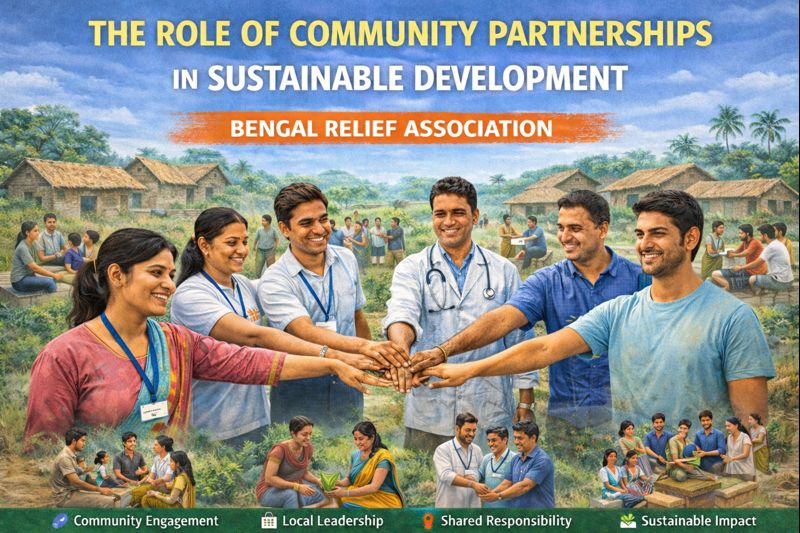
The Role of Community Partnerships in Sustainable Development
Sustainable development is not achieved through isolated efforts. It is built through collaboration, trust, and shared responsibility. Across India—and particularly in a diverse and socially complex state like West Bengal—long-term development depends on how well communities, organizations, and institutions work together.
At Bengal Relief Association, we strongly believe that community partnerships are the foundation of sustainable change. Whether the goal is improving education, strengthening healthcare, ensuring food security, or responding to disasters, meaningful progress happens only when local communities are active partners, not passive recipients.
This article explores why community partnerships matter, how they contribute to sustainable development, and how Bengal Relief Association works hand-in-hand with communities across West Bengal to create lasting impact.
Understanding Sustainable Development at the Grassroots Level
Sustainable development goes beyond short-term relief. It focuses on improving lives in ways that are:
- Long-lasting
- Environmentally responsible
- Socially inclusive
- Economically viable
For development initiatives to be sustainable, they must be rooted in the real needs, values, and capacities of the people they are meant to serve. This is where community partnerships become essential.
Communities understand their own challenges better than any external organization. When local knowledge is combined with organizational resources and expertise, development efforts become more effective and enduring.
Why Community Partnerships Matter
Community partnerships ensure that development is people-centered rather than top-down. Instead of imposing solutions, partnerships encourage dialogue, participation, and ownership.
Strong community partnerships help to:
- Identify real and urgent needs
- Design culturally appropriate solutions
- Build trust and transparency
- Improve program acceptance and participation
- Ensure long-term sustainability
At Bengal Relief Association, we see communities not as beneficiaries, but as co-creators of change.
Community Participation Builds Ownership
One of the biggest challenges in development work is sustainability after external support reduces or ends. Programs that are designed and implemented without community involvement often fail to continue.
When communities are involved from the beginning:
- They feel ownership of the initiative
- They protect and maintain outcomes
- They take responsibility for long-term success
For example, when parents, teachers, and local leaders are involved in education programs, children are more likely to stay in school and succeed academically.
Strengthening Education Through Community Collaboration
Education is a core focus area for Bengal Relief Association. However, improving education outcomes requires more than providing books or classes—it requires community engagement.
We work closely with:
- Parents and guardians
- Local teachers and schools
- Community elders and leaders
- Youth volunteers
Through these partnerships, we:
- Encourage regular school attendance
- Reduce dropout rates
- Promote girl child education
- Support home-based learning environments
When communities value education, children thrive.
Community Partnerships in Healthcare Initiatives
Healthcare access remains a challenge in many rural and low-income areas of West Bengal. Medical camps and awareness programs are most effective when communities actively participate.
Bengal Relief Association collaborates with:
- Local health workers
- Community volunteers
- Panchayat representatives
- Women’s self-help groups
These partnerships help us:
- Identify vulnerable patients
- Increase participation in health camps
- Spread awareness about hygiene and nutrition
- Ensure follow-up care and continuity
Community trust plays a vital role in encouraging people to seek medical help early.
Empowering Women Through Local Networks
Women are powerful agents of change within communities. Sustainable development is incomplete without women’s participation and leadership.
We partner with:
- Women’s self-help groups
- Local women leaders
- Mothers’ groups
Through these partnerships, we support:
- Girls’ education
- Nutrition and health awareness
- Financial and social empowerment
- Community leadership roles for women
When women are empowered, entire families and communities benefit.
Disaster Preparedness and Community Resilience
West Bengal is prone to floods, cyclones, and other natural disasters. During emergencies, local communities are always the first responders.
Bengal Relief Association works with community partners to:
- Prepare disaster response plans
- Identify vulnerable households
- Organize relief distribution
- Support recovery and rehabilitation
Community partnerships make disaster response faster, more organized, and more effective. They also help communities become more resilient to future crises.
Local Volunteers as Change Makers
Volunteers from within the community are essential to sustainable development. They understand local languages, customs, and social dynamics.
Community volunteers help by:
- Supporting education and health programs
- Acting as peer educators
- Monitoring progress and feedback
- Encouraging participation
At Bengal Relief Association, we invest in training and supporting local volunteers so that development continues from within the community itself.
Trust, Transparency, and Mutual Respect
Strong partnerships are built on trust. Communities need to trust that organizations are working with honest intentions and responsible practices.
Bengal Relief Association emphasizes:
- Open communication
- Transparent use of resources
- Regular community feedback
- Respect for local traditions and values
This mutual respect strengthens partnerships and ensures long-term collaboration.
From Beneficiaries to Leaders
One of the most powerful outcomes of community partnership is transformation. Over time, community members move from being beneficiaries to becoming leaders and advocates.
We have seen:
- Parents advocating for children’s education
- Youth leading awareness campaigns
- Women organizing health and nutrition drives
- Communities sustaining programs independently
This transition is the true mark of sustainable development.
Partnerships Beyond the Community
While communities are at the center, sustainable development also requires collaboration with:
- Local schools and institutions
- Healthcare providers
- Other NGOs
- Donors and supporters
Bengal Relief Association acts as a bridge, connecting community needs with wider networks of support and expertise.
Long-Term Impact of Community-Led Development
Community partnerships lead to:
- Programs that last longer
- Better use of resources
- Reduced dependency
- Stronger social bonds
- Self-reliant communities
When communities are empowered, development becomes a shared journey rather than an external intervention.
How You Can Support Community Partnerships
You can help strengthen community-led development by:
- Supporting programs that prioritize local participation
- Volunteering your time or skills
- Funding long-term initiatives, not just short-term aid
- Promoting community voices and leadership
Every contribution helps build stronger partnerships and deeper impact.
Conclusion: Building Sustainable Futures Together
Sustainable development is not about doing things for communities—it is about working with them. At Bengal Relief Association, community partnerships are at the heart of everything we do.
By listening to local voices, respecting community wisdom, and sharing responsibility, we create solutions that last. Together with communities across West Bengal, we are building a future that is healthier, more educated, and more resilient.
True development is collective—and together, we can create change that endures for generations.