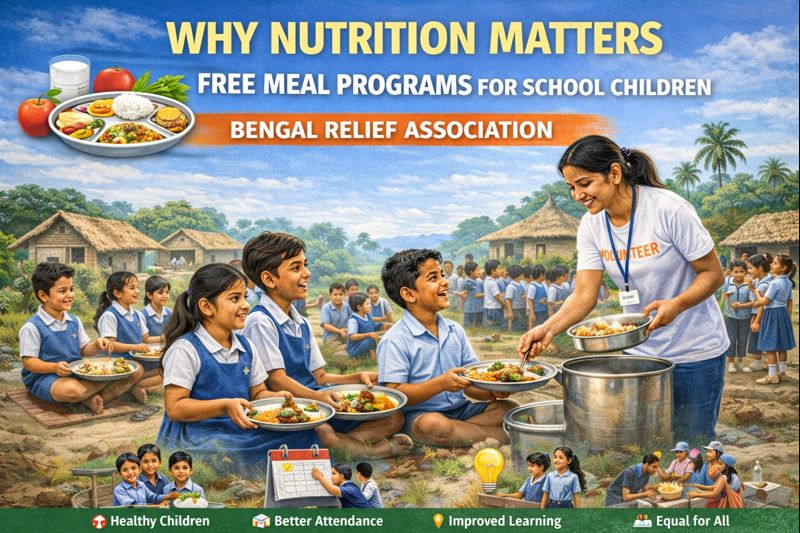
Why Nutrition Matters: Free Meal Programs for School Children
Nutrition is the foundation of a child’s physical growth, mental development, and overall well-being. For school-going children, proper nutrition is not only essential for health but also directly linked to learning ability, concentration, attendance, and academic performance. Yet, for thousands of children from economically challenged families in West Bengal, daily nutritious meals remain uncertain.
Bengal Relief Association believes that no child should go to school hungry. Our free meal programs for school children are designed to address hunger, improve nutrition, and support education for underprivileged children across West Bengal. By ensuring access to free, healthy meals, we help children stay in school, learn better, and grow into healthier adults.
The Hidden Hunger Crisis Among School Children
Hunger is not always visible. Many children attend school on empty stomachs, silently battling weakness, fatigue, and poor concentration. In low-income households, limited income often means insufficient food, poor diet quality, and irregular meals.
Common nutritional challenges faced by children in West Bengal include:
- Inadequate daily calorie intake
- Protein and micronutrient deficiencies
- Iron-deficiency anemia
- Poor immunity and frequent illness
- Stunted growth and low energy levels
These issues directly affect a child’s ability to learn and participate actively in school.
The Link Between Nutrition and Education
Education and nutrition are deeply connected. A hungry child cannot focus in class, retain information, or perform well academically. Studies and real-world experiences consistently show that children who receive regular nutritious meals:
- Have better concentration and memory
- Attend school more regularly
- Show improved academic performance
- Participate more actively in classroom activities
- Have lower dropout rates
Bengal Relief Association understands that feeding a child is also an investment in education.
Why Free Meal Programs Are Essential
For many families in West Bengal, poverty forces difficult choices. When income is limited, food expenses often take priority over education, or vice versa. Children may be sent to school without proper meals, or they may be kept at home to help earn money.
Free meal programs remove this burden from families by:
- Ensuring at least one nutritious meal per school day
- Reducing household food insecurity
- Encouraging parents to send children to school
- Preventing child labor linked to hunger
By providing free meals, Bengal Relief Association supports both children and their families.
Bengal Relief Association’s Free Meal Initiative
Bengal Relief Association runs free meal programs for school-going children from economically weaker sections of society. These programs are carefully planned to meet the nutritional needs of growing children while respecting local food habits.
Our goals are simple yet impactful:
- Eliminate classroom hunger
- Improve child nutrition
- Increase school attendance
- Support learning and development
Every meal served is a step toward a healthier and brighter future.
What Makes a Nutritious Meal for Children?
Nutrition is not just about filling stomachs—it is about providing balanced, wholesome food that supports growth and development.
Our free meal programs focus on:
- Adequate calories for daily energy
- Protein for growth and muscle development
- Vitamins and minerals for immunity
- Clean, safe, and hygienic food preparation
Meals are planned to be simple, nutritious, and culturally appropriate, ensuring children enjoy and benefit from them.
Supporting Physical Growth and Health
Childhood is a critical stage of physical development. Malnutrition during these years can lead to lifelong health issues.
Through regular access to nutritious meals, Bengal Relief Association helps:
- Improve height and weight development
- Reduce cases of undernutrition and anemia
- Strengthen immune systems
- Lower school absenteeism due to illness
Healthy children are better equipped to learn, play, and thrive.
Improving Attendance and Reducing Dropouts
One of the most visible benefits of free meal programs is improved school attendance. For many children, a free meal becomes a strong motivation to attend school regularly.
Our programs help:
- Reduce absenteeism caused by hunger
- Encourage consistent school attendance
- Prevent early dropouts
- Support continuity in education
When children know they will receive a meal at school, parents are more likely to prioritize education.
Encouraging Equality and Dignity
Free meal programs also promote social equality. In classrooms where children come from different economic backgrounds, shared meals create a sense of inclusion and dignity.
Bengal Relief Association’s meal initiatives:
- Ensure no child feels excluded due to poverty
- Promote unity and shared experiences
- Create a supportive school environment
- Foster respect and empathy among students
Every child deserves to eat with dignity, without shame or discrimination.
The Role of Nutrition in Cognitive Development
Proper nutrition plays a vital role in brain development. Deficiencies in essential nutrients can impair concentration, memory, and problem-solving abilities.
By providing balanced meals, we support:
- Better cognitive function
- Improved learning outcomes
- Increased attention span
- Enhanced classroom participation
A nourished mind learns better and dreams bigger.
Community and Parental Impact
Free meal programs benefit not only children but also their families and communities. Parents gain peace of mind knowing their children receive at least one nutritious meal daily.
These programs:
- Reduce financial stress on families
- Encourage parental trust in schools
- Strengthen community support for education
- Promote long-term health awareness
When communities see positive changes in children, support for education and nutrition grows.
Hygiene, Safety, and Accountability
Bengal Relief Association places strong emphasis on hygiene and safety in all meal programs.
We ensure:
- Clean cooking and serving practices
- Safe drinking water availability
- Regular monitoring of food quality
- Responsible use of donations and resources
Transparency and accountability remain at the core of our work.
Role of Volunteers and Donors
Our free meal programs are made possible through the support of volunteers, donors, and well-wishers.
Volunteers assist in:
- Meal preparation and distribution
- Monitoring and coordination
- Awareness and community engagement
Donors help sustain and expand these programs, ensuring more children receive nutritious meals.
Long-Term Impact of Feeding a Child
The impact of feeding a child goes far beyond one meal. Over time, free meal programs contribute to:
- Better educational outcomes
- Healthier generations
- Reduced poverty cycles
- Stronger and more educated communities
When children are nourished today, society benefits tomorrow.
How You Can Support Free Meal Programs
You can play an important role in fighting child hunger.
You can help by:
- Donating to support free meal initiatives
- Sponsoring meals for school children
- Volunteering your time
- Spreading awareness about child nutrition
Every contribution helps feed a child and fuel their future.
Conclusion: Nourishing Minds, Building Futures
Hunger should never be a barrier to education. At Bengal Relief Association, we believe that nutrition is the foundation of learning, growth, and dignity.
Through our free meal programs for school children, we are not just serving food—we are nurturing minds, strengthening bodies, and creating opportunities for a better life.
By ensuring that children in West Bengal receive nutritious meals, we take a meaningful step toward a healthier, educated, and empowered society.
Together, we can ensure that no child learns on an empty stomach and every child gets the nourishment they deserve.